

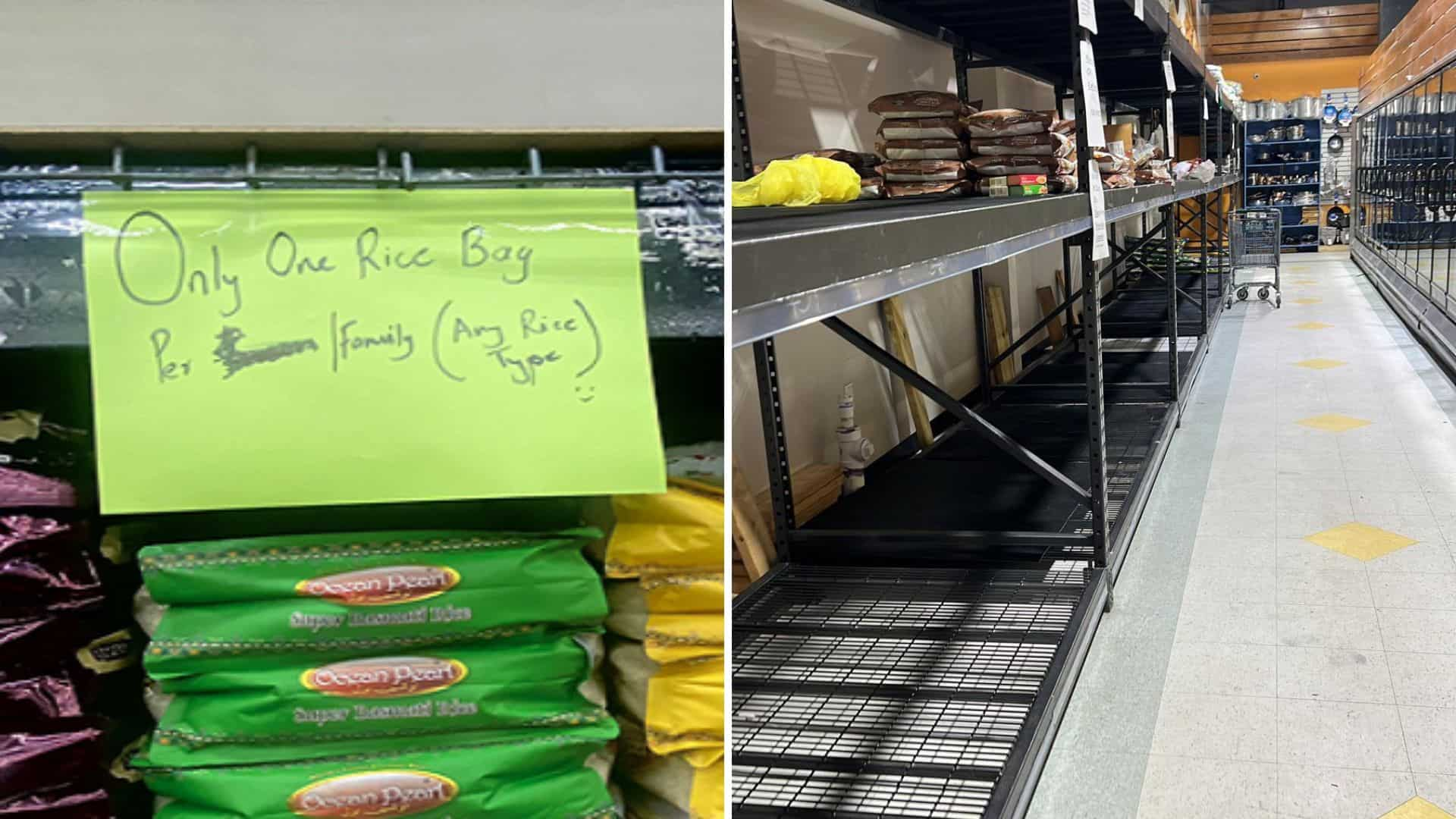
In response to India’s announcement to ban exports of non-basmati rice, US department stores saw an increase in panic buying of rice.
Due to the rise in demand many stores have limited the number of bags of rice customers can purchase. This results in empty shelves.
To control the situation and ensure fair distribution, several shops have put up notices limiting customers to buy only one bag of rice per family.
However, the teeth have raised concerns because some people may hoard the rice and try to sell it at a significantly higher price through online forums.
Concerns about rising prices due to accumulation and global effects
The fallout from India’s export ban on non-basmati rice reverberated around the world, especially in the Indian diaspora. As reported by Business Today, non-resident Indians (NRIs) bought 10-15 bags of Sona Masoor rice in response to the ban.
Many NRIs took to X (formerly known as Twitter) to share the impact of the rice ban with videos showing scenes of sheer panic buying and running around grocery stores.
Despite the concerns, Kiran Kumar Pola, head of major rice exporter Deccan Grains India, assured US authorities that the country has enough rice reserves to last six months.
A group of Telangana rice exporters has also approached the Agriculture and Processed Food Export Development Authority (APEDA) seeking reclassification and lifting of the export ban on non-basmati rice. Their assurances that there is much more to the US market than basmati rice following India’s export ban tend to ease concerns. Despite assurances from officials and experts that stocks are sufficient for the next six months, many NRIs on X (formerly Twitter) complained about rising food prices in the US, usually due to shortages and high demand.
India’s export ban only applies to non-basmati rice, and basmati rice is still allowed to be traded outside the country. Most South Indians prefer Sona Masoor rice, which falls under the non-basmati category.
Food ministry of India has addressed the circumstances and said the export ban is obligatory to ensure adequate availability and stabilize prices in the domestic market. They show a significant rise of 11.5 percent in retail rice prices over the last 12 months and a 35 percent year-on-year rise in India’s non-basmati white rice exports in the second quarter, driven by global demand. The price of a 9.07kg bag of rice, which used to cost between $16 and $18, has now doubled, with prices even reaching $50 in some places.
As per the statistics, India exports an average of 6,000 tonnes of non-basmati rice to the US per month, of which Telangana and Andhra Pradesh account for 4,000 tonnes.