

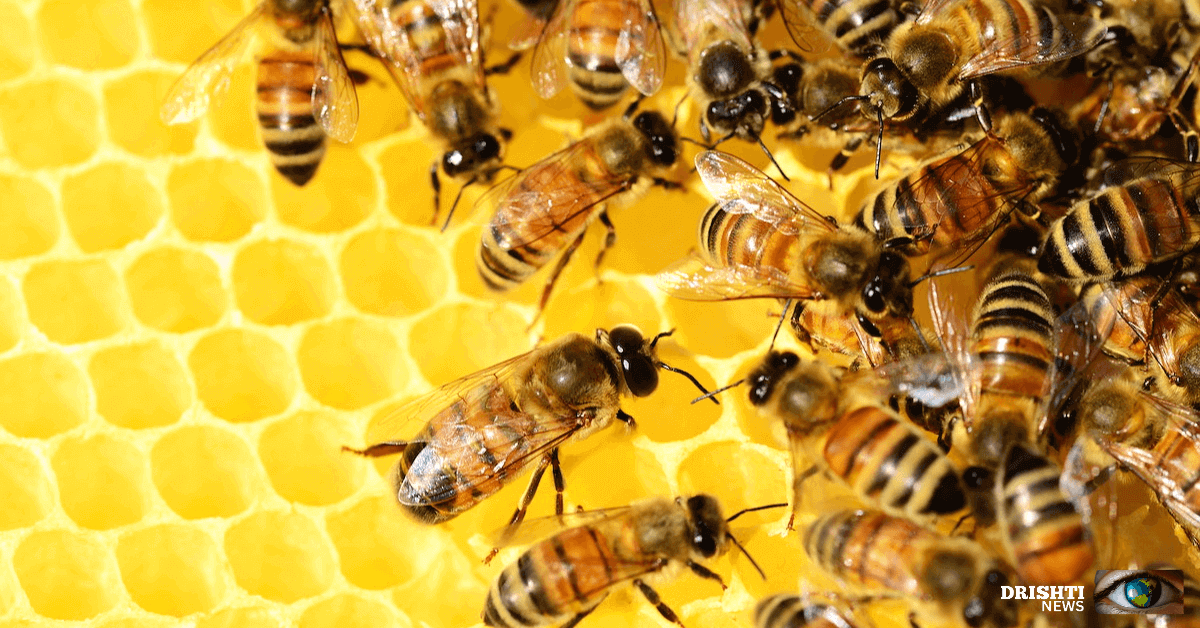
The honey bee is a fascinating and important insect that plays a vital role in the ecosystem. There are three types of bees in a honey bee colony: the queen, drones, and workers.
Queen
The queen bee is the largest bee in the colony, and she is responsible for laying eggs. She can lay up to 2,000 eggs per day, and her sole purpose is to reproduce and maintain the colony.
Drones
Drones are male bees that are responsible for mating with the queen. They do not have stingers and do not collect nectar or pollen. Once they have mated with the queen, they die.
Workers
Workers are infertile female bees that make up the majority of the colony. They are responsible for collecting nectar and pollen, building and maintaining the hive, caring for the young, and protecting the colony. Workers are also responsible for producing honey.
Honey bees collect nectar from flowers using their long, tube-like tongues. The nectar is stored in a special stomach called the honey stomach, where enzymes break down the sugars in the nectar. The bees then regurgitate the nectar into the hive, where worker bees use their wings to fan the nectar and evaporate the water. This process turns the nectar into honey.
Once the honey is ready, the bees cap it with wax to seal it in. The honey is stored in the hive and used as a food source for the bees. In the winter months, when there are no flowers to collect nectar from, the bees rely on the honey they have stored to survive.
Honey bees make hives by collecting and processing wax from special glands on their bodies. The bees chew the wax and shape it into honeycomb cells, which are used to store honey, pollen, and brood. The honeycomb is arranged in a hexagonal pattern, which allows for maximum use of space and optimal storage of food and young. The bees use propolis, a sticky substance made from tree resin, to seal the hive and protect it from weather, predators, and disease. The construction of a hive is a remarkable feat of social organization and cooperation, and it is essential to the survival of the colony.
Royal jelly is a nutritious substance produced by worker bees that is fed to the queen bee. It is a milky white secretion that is high in protein, vitamins, and minerals. Royal jelly is used to feed the queen bee throughout her life, and it is believed to be the reason why she is larger and lives longer than other bees in the colony. Royal jelly is also sold as a dietary supplement and is believed to have a variety of health benefits, although more research is needed to confirm these claims.
The life cycle of a worker bee begins when the egg hatches into a larva. The larva is fed a special food called royal jelly for the first few days of its life, which helps it develop into a worker bee. The larva then spins a cocoon and undergoes metamorphosis, emerging as a fully developed worker bee. The worker bee spends the first few days of its life inside the hive, cleaning, feeding the brood, and building comb. As it gets older, it begins to venture outside the hive to forage for nectar and pollen. The worker bee’s lifespan is typically around six weeks, although this can vary depending on the time of year and the needs of the colony. As the worker bee ages, its duties change, and it may become a guard bee, a nurse bee, or a forager bee. The life cycle of a worker bee is a fascinating example of the complex social organization and division of labor that exists within a honey bee colony.
Honey bees are social insects that live in large colonies. They communicate with one another through a complex system of pheromones and dances. Honey bees are important pollinators, and they play a crucial role in the reproduction of many plants.