

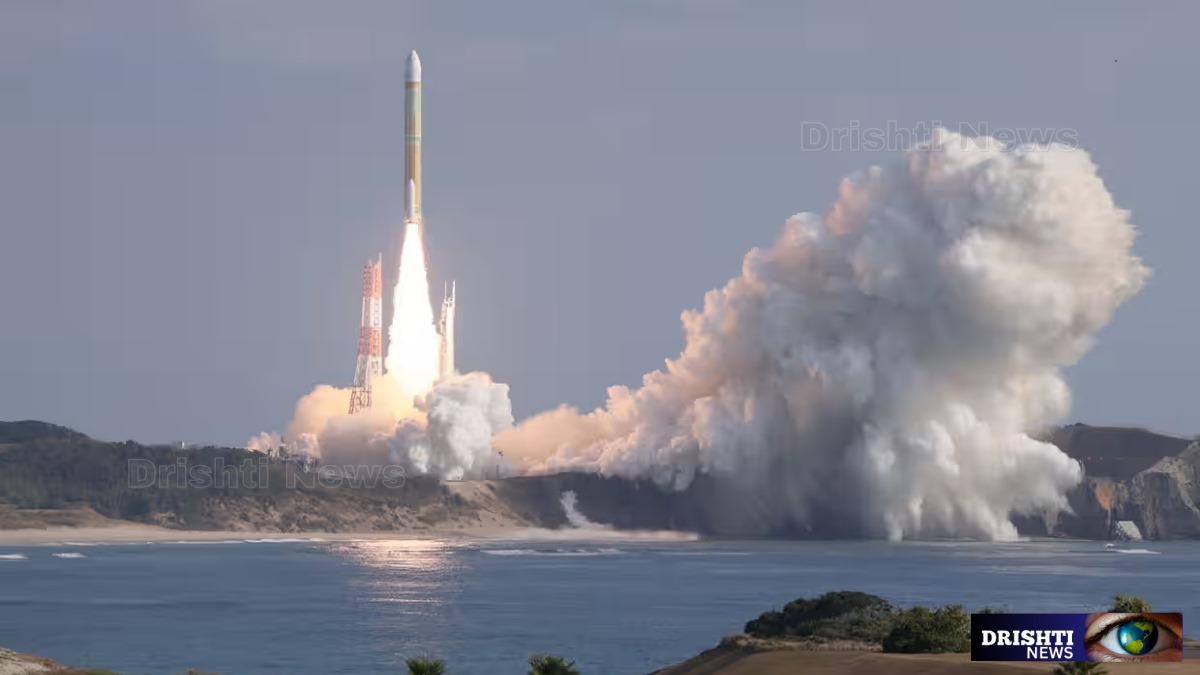
In a resounding success for Japan’s space endeavours, the country’s space agency, JAXA, announced the triumphant launch of its next-generation H3 rocket. This achievement marks the third attempt for the H3, following years of setbacks and two previous unsuccessful tries. The flexible and cost-effective H3, positioned as a potential rival to SpaceX’s Falcon 9, soared into orbit from the Tanegashima Space Centre in southwestern Japan at 9:22 am (0022 GMT).
Table of Contents
Japan’s Triumph Over Challenges
Amid years of delays, the H3 rocket, developed collaboratively by JAXA and Mitsubishi Heavy Industries, has emerged as a beacon of success. Cheers and applause echoed through the JAXA control center as the agency’s livestream confirmed the successful ignition of H3’s engines, signifying its successful entry into orbit.
The journey to this achievement wasn’t without hurdles. The inaugural H3 launch in February 2023 faced ignition issues, forcing abandonment. The second attempt in March of the same year encountered technical problems, leading to a destruct command shortly after liftoff. However, persistent efforts and improvements to the ignition system have paved the way for this historic success.
Read: India Surges to 3rd Place in G20 Digital Rankings
H3: A Versatile Spacecraft
The H3 serves as the successor to the H-IIA launch system, debuting in 2001. Designed for high flexibility, reliability, and cost performance, the H3 aims to sustain Japan’s autonomous access to space. It distinguishes itself as an all-rounder, capable of launching satellites into Earth orbit, serving as a supply vehicle for space stations, and potentially contributing to lunar missions.
During this successful launch, the H3 carried two microsatellites with distinct purposes. One microsatellite, equipped with sensors to detect infrared rays, aims to monitor the operational conditions of ground-based factories. The other is expected to aid disaster prevention by capturing photos and videos.
The Significance of H3
Associate Professor Alice Gorman, a space exploration expert at Flinders University, underscores the significance of the H3 as an all-encompassing vehicle. Its ability to serve various functions, from launching satellites to lunar exploration, positions it as a pivotal asset for Japan’s space ambitions.
Read Latest Technology News in Drishti News Malayalam Edition
While the H3 is not reusable like SpaceX’s Falcon 9, scientists emphasize the uniqueness of its world-first technology. The H3 features a first-stage engine with novel capabilities, delivering greater thrust compared to contemporary rockets. Michele Trenti, Director of the Melbourne Space Laboratory at the University of Melbourne, notes that the H3’s potential cost-effectiveness could make solar system exploration more affordable.
The success of the H3 launch follows Japan’s recent achievement of landing an unmanned probe on the Moon, solidifying the country’s position in the global space arena. Despite past failures, Japan’s space program continues to strive for excellence, with ambitions that extend beyond Earth’s atmosphere. The H3 rocket’s success stands as a testament to Japan’s dedication to space exploration and its potential to contribute significantly to future space missions.