

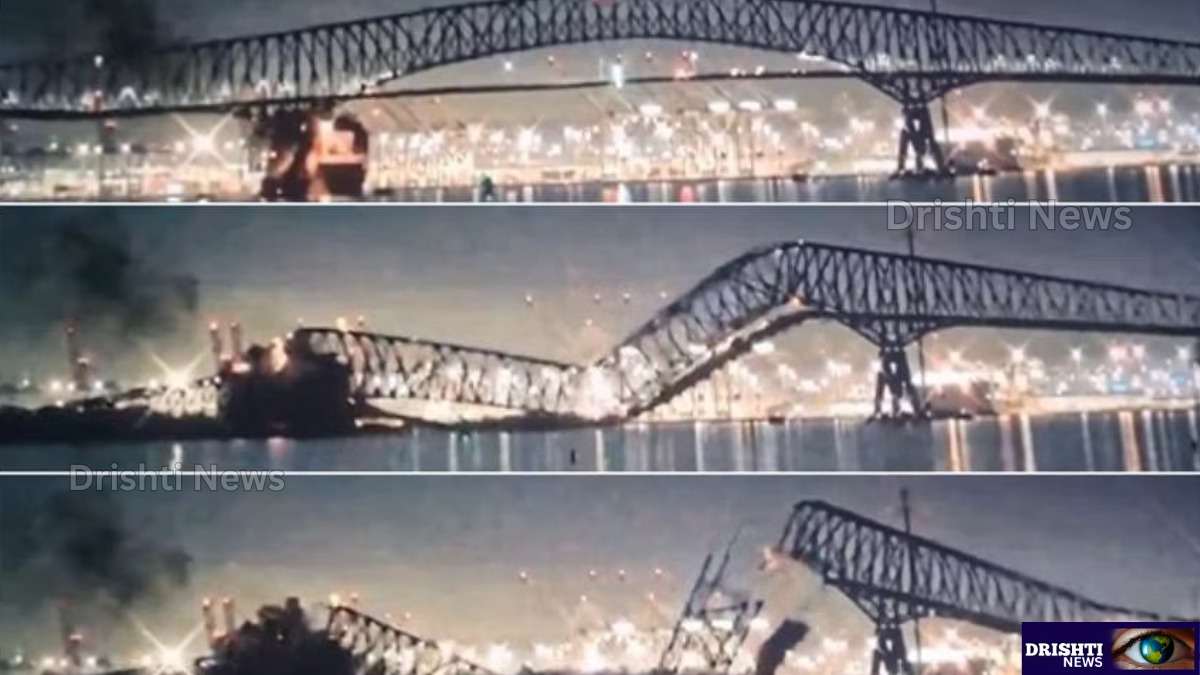
A catastrophic incident unfolded in the US city of Baltimore as a major bridge collapsed following a collision with a cargo ship, plunging people and vehicles into the Patapsco River. The collapse of a large section of the Francis Scott Key Bridge, a 1.6-mile-long structure, shocked onlookers and sparked a massive rescue operation in the early hours of the morning.
Table of Contents
Baltimore Bridge Collapse: Scenes of Chaos and Rescue Efforts
Footage captured the dramatic moment when the cargo ship struck the Baltimore Bridge, leading to its collapse into the river below. Vehicles can be seen plummeting from the structure as the impact sends shockwaves through the area. Initial reports from Baltimore’s fire service suggested that up to 20 individuals were in the water following the collapse, although this number has been revised since then.
In a press briefing on Tuesday morning, James Wallace, chief of Baltimore’s fire department, provided updates on the rescue operation:
- Two individuals have been rescued from the water, with one in critical condition and the other unharmed.
- Authorities are actively searching for approximately seven individuals still missing in the water.
- An extensive search and rescue effort is underway across a large area, with the assistance of the coast guard.
- Sonar devices have detected submerged vehicles in the water, adding complexity to the rescue mission.
Maryland governor Wes Moore declared a state of emergency as rescue teams worked tirelessly to locate and rescue those in the water. The challenging conditions, with water temperatures ranging between 9-10°C in Baltimore Harbor, added urgency to the operation.
Response and Assessment of the Incident
Speaking at a news conference, Brandon Scott, Baltimore mayor, described the Baltimore Bridge collapse as reminiscent of a scene from an action movie, emphasizing the unprecedented nature of the event. Kevin Cartwright, director of communications for the Baltimore City Fire Department, characterized the incident as a “mass-casualty, multi-agency event” that would require sustained efforts over several days.
Emergency responders faced hazardous conditions, with unstable debris and submerged vehicles posing risks to rescue operations. Mr. Cartwright highlighted the importance of cautious operation due to the presence of cargo or retainers hanging from the bridge, further complicating the situation.
The White House expressed its concern and offered support to local authorities, emphasizing the need for a swift and coordinated response to the “horrific incident.” Federal agencies, including the US Coast Guard, were actively engaged in search and rescue efforts, with no indication of malicious intent behind the bridge collapse.
Investigation and Speculation on Causes
As investigations into the incident commenced, attention turned to the circumstances leading up to the collision. Data from marine tracking systems indicated that the cargo ship, known as the Dali, experienced power loss and course adjustments moments before the collision. While the exact cause of the incident remained under scrutiny, initial speculation pointed towards potential machinery or steering failures aboard the vessel.
David McFarlane, director of Maritime Risk and Safety Consultants Ltd, suggested that mechanical failures were more likely culprits than human error, given the operational complexities involved in such maritime maneuvers. However, conclusive findings awaited thorough inspections by authorities.
Bridge’s Significance and Impact on Community
The Francis Scott Key Bridge, a vital transportation artery in the region, holds significant importance for locals and serves as a key link for both traffic and port activities. Residents expressed shock and concern over the Baltimore bridge’s collapse, highlighting its critical role in daily commutes and economic activities.
Despite the structural damage and traffic disruptions caused by the incident, the primary focus remained on rescue and recovery efforts to ensure the safety of individuals affected by the collapse. Efforts to clear debris and assess the Baltimore bridge’s integrity were underway, as authorities worked towards restoring normalcy to the community.
The collapse of the Francis Scott Key Bridge underscored the vulnerability of critical infrastructure and the importance of stringent safety protocols in maritime operations. As investigations continued and rescue operations persisted, communities rallied together in support of those affected by the tragic incident.
Click to join our whatsapp group
Amidst Devastation, Hope and Resilience Prevail
As Baltimore grappled with the aftermath of the bridge collapse, stories of heroism and resilience emerged, exemplifying the spirit of unity in times of adversity. While the road to recovery would be arduous, the unwavering determination of emergency responders and the support of the wider community offered rays of hope amidst the devastation.
The tragedy served as a stark reminder of the fragility of life and the imperative of prioritizing safety in infrastructure and maritime operations. In the wake of the incident, calls for enhanced safety measures and preventative actions echoed across the nation, as authorities vowed to learn from the catastrophe to prevent similar tragedies in the future.
As the investigation into the Baltimore bridge collapse unfolded and recovery efforts continued, Baltimore stood united in its resolve to overcome the challenges ahead. Through collective efforts and unwavering solidarity, the city embarked on a journey of healing, determined to emerge stronger from the ordeal.
Also read Miracle Amid Tragedy: Girl Rescued After 16 Hours Under Rubble